What is a crypto wallet and how does it work? Learn the difference between hot and cold wallets, how to protect your private keys, and how to choose the right one.

A sleek hardware cryptocurrency wallet. AI-generated image.
Introduction
If you own Bitcoin, Ethereum, or any other cryptocurrency, you have probably heard the phrase: “Not your keys, not your coins.” It is one of the most important concepts in the crypto world, and it all comes down to one thing — your wallet.
A crypto wallet is the tool that gives you access to your digital assets. Without one, you cannot send, receive, or even see your coins properly. But despite the name, a wallet does not actually store your cryptocurrency. Understanding what it really does is the first step toward keeping your investments safe.
In this beginner’s guide, you will learn what a crypto wallet is, how it works, the difference between hot and cold wallets, and how to choose the right one for your needs.
A crypto wallet gives you access to your digital assets. AI-generated image.
What Is a Crypto Wallet?
A crypto wallet is a software program or a physical device that stores the private keys to your cryptocurrency. Your coins themselves never leave the blockchain — a public digital ledger where every transaction is recorded. What the wallet holds is the key that proves you own those coins and allows you to move them.
Think of it like a bank card. The money is not inside the card; it is in the bank. But without the card and its PIN, you cannot access your money. In the same way, without your private key, you cannot access your crypto — no matter how much you own.
This is why the phrase “not your keys, not your coins” matters so much. If a platform holds your keys, it controls your coins. If it is hacked, freezes your account, or goes out of business, you may lose everything. A wallet puts that control back in your hands.
How Does a Crypto Wallet Work?
Every wallet has two essential parts:
- Public address: a long string of letters and numbers that works like an account number. You share it with others so they can send you cryptocurrency.
- Private key: a secret code that works like a password. It signs your transactions and proves you own the funds. You must never share it with anyone.
Most wallets also generate a seed phrase (also called recovery phrase) — usually 12 or 24 random words. This phrase is the master key to your wallet. If you lose your device or forget your password, the seed phrase is the only way to recover your funds. Whoever has the seed phrase controls the wallet.
When you send cryptocurrency, your wallet uses your private key to sign the transaction, and the network verifies it using your public address. The whole process takes seconds, but it is the foundation of how digital assets work.
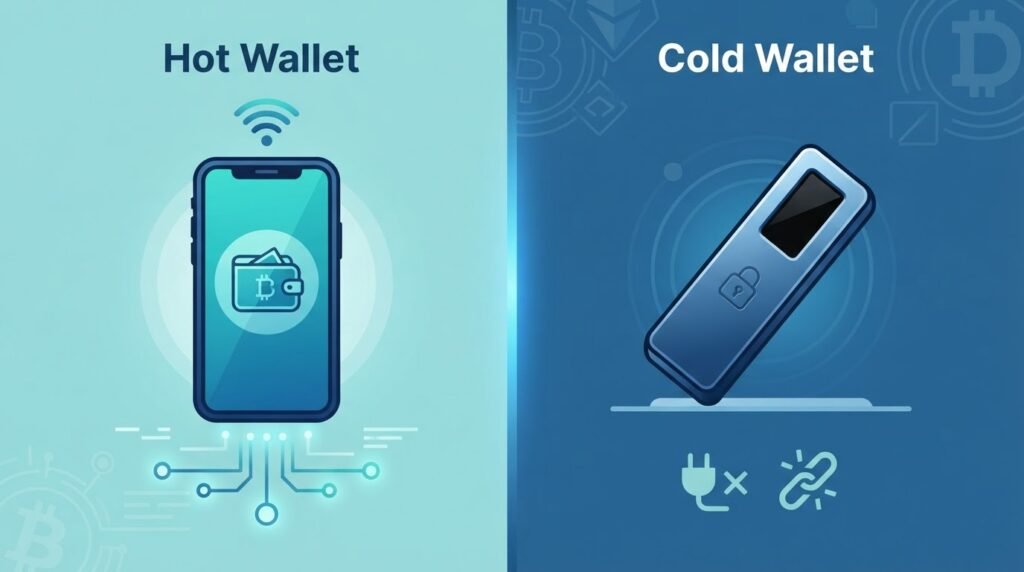
Hot wallets are connected to the internet; cold wallets stay offline. AI-generated image.
Hot Wallets vs Cold Wallets: What’s the Difference?
Wallets are divided into two main categories: hot wallets and cold wallets. The difference is simple — whether the wallet is connected to the internet.
Hot wallets are wallets connected to the internet. They include mobile apps, desktop programs, web wallets, and the wallets offered by cryptocurrency exchanges. They are fast and convenient, which makes them ideal for trading, paying, and holding small amounts. The trade-off is security: because they are online, they are more exposed to hackers, malware, and phishing attacks.
Cold wallets are wallets that stay offline. The most common type is the hardware wallet — a small physical device, similar to a USB stick, that stores your private keys without ever connecting them to the internet. There are also paper wallets, where keys are printed on paper. Cold wallets are much harder to hack, which makes them the standard choice for storing larger amounts over the long term. The trade-off is convenience: sending funds takes a few extra steps.
In short: hot wallets are like a wallet in your pocket — great for daily use, but you would not keep your life savings there. Cold wallets are like a safe at home — less convenient, but far more secure.
Hot Wallets Explained
Hot wallets come in several forms:
- Mobile wallets: apps on your smartphone, perfect for everyday payments and small balances.
- Desktop wallets: software installed on your computer, offering more features and control.
- Web wallets: accessed through a browser, convenient but dependent on the provider’s security.
- Exchange wallets: wallets managed by platforms like exchanges. Easy to use, but the exchange holds your keys — which means you do not have full control of your coins.
Hot wallets are the best starting point for beginners because they are free, easy to set up, and great for learning. Just remember: keep only what you need for daily use in a hot wallet.
Cold Wallets Explained
Cold wallets are designed for security first:
- Hardware wallets: physical devices that keep your private keys offline. They are widely considered the safest way to store cryptocurrency. Even if your computer is infected, your keys stay protected inside the device.
- Paper wallets: your keys printed on paper and stored somewhere safe. Extremely secure against online attacks, but fragile — paper can be lost, damaged, or destroyed.
For anyone holding a meaningful amount of cryptocurrency, a hardware wallet is the natural next step. It is the difference between hoping your exchange stays safe and knowing your coins are under your control.
How to Choose the Right Wallet
There is no single “best” wallet — the right choice depends on your situation. Ask yourself these questions:
- How much do you hold? Small amounts for everyday use: a hot wallet is enough. Significant savings: move them to a cold wallet.
- How often do you trade? Frequent traders need the speed of a hot wallet. Long-term holders benefit from the security of a cold wallet.
- How experienced are you? Beginners can start with a reputable mobile wallet and upgrade later.
- How much risk are you comfortable with? If the answer is “very little,” go cold.
A practical rule of thumb: use a hot wallet for spending and trading, and a cold wallet for storing the majority of your assets.
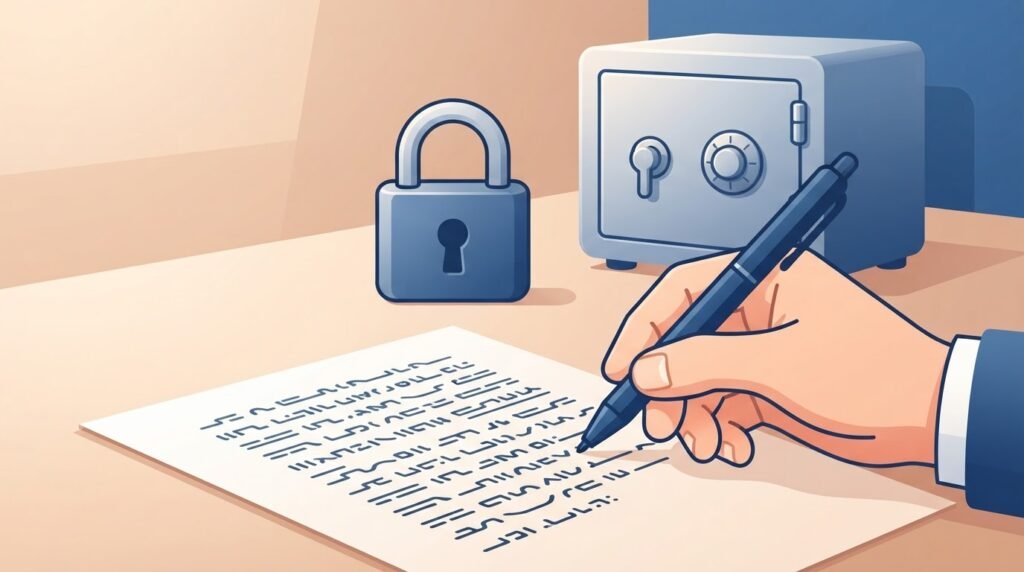
Write down your seed phrase and store it offline. AI-generated image.
Security Best Practices
- Write down your seed phrase on paper and store it in a safe place. Never keep it in a screenshot, a note app, or the cloud.
- Never share your private keys or seed phrase with anyone. No legitimate service will ever ask for them.
- Enable two-factor authentication (2FA) wherever possible.
- Double-check addresses before sending funds. Cryptocurrency transactions cannot be reversed.
- Beware of phishing: always download wallet apps from official sources and verify website addresses.
- Keep your wallet software updated to receive the latest security fixes.
Common Mistakes to Avoid
- Losing your seed phrase — without it, your funds are unrecoverable.
- Leaving large amounts on an exchange for months or years.
- Downloading fake wallet apps from unofficial sources.
- Entering your seed phrase on any website — this is almost always a scam.
- Sending crypto to the wrong address or network.
Conclusion
A crypto wallet is the foundation of owning cryptocurrency safely. Hot wallets offer convenience for daily use; cold wallets offer protection for long-term savings. The best strategy is simple: keep small amounts in a hot wallet for everyday transactions, and store the rest in a cold wallet.
Remember the golden rule: not your keys, not your coins. Taking control of your keys is one of the most important steps you can take as an investor.
Looking for a hardware wallet? We are preparing a comparison of the best options on the market — stay tuned.
Frequently Asked Questions
Is a crypto wallet safe? Yes, when used correctly. Cold wallets are extremely safe because they stay offline. Hot wallets are safe for small amounts if you follow security best practices.
Do I need a wallet if I use an exchange? If you hold crypto on an exchange, the exchange controls your keys. For full control of your coins, you should move them to your own wallet.
What happens if I lose my wallet? If you have your seed phrase, you can recover your wallet on any compatible device. Without it, your funds are lost forever.
Can a wallet be hacked? Hot wallets can be hacked because they are online. Cold wallets are far more resistant because their keys never touch the internet.
Disclaimer: This article is for educational purposes only and does not constitute financial advice. Cryptocurrency investments involve risk. Always do your own research. This article may contain affiliate links — if you purchase through them, we may earn a commission at no extra cost to you.


Pingback: How to Buy Your First Bitcoin: A Step-by-Step Guide for Beginners - 318798 Markets