Introduction
For years, buying Bitcoin meant dealing with exchanges, wallets and private keys. A Bitcoin ETF changes that: it lets you invest in Bitcoin through a traditional brokerage account, the same way you buy stocks.
Since the first US spot Bitcoin ETFs launched in 2024, this has become one of the most popular ways to get exposure to Bitcoin. This guide explains what a Bitcoin ETF is, how it works, the main types and the pros and cons.

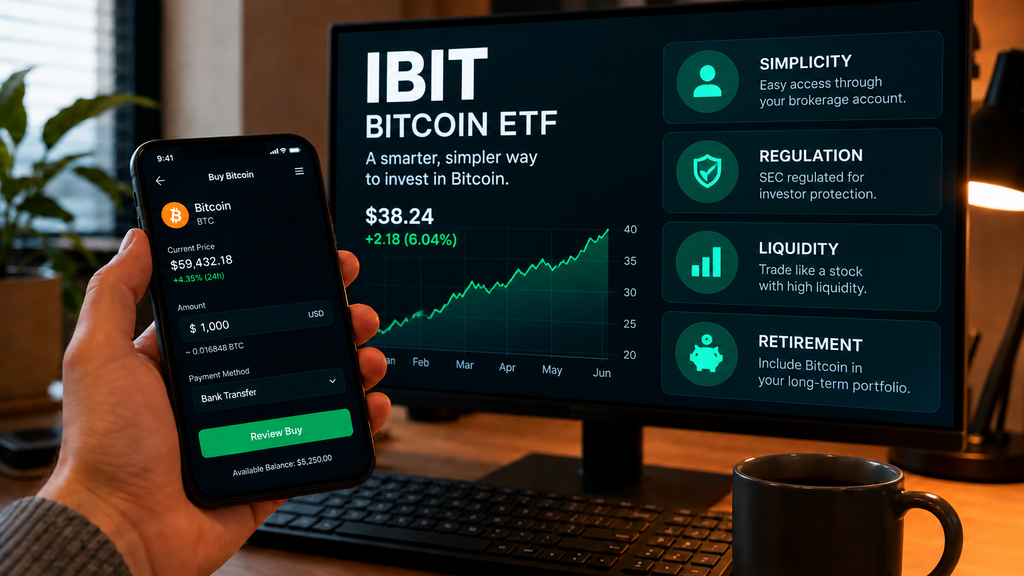
A Bitcoin ETF allows you to invest in BTC through a traditional brokerage. AI-generated image.
What is a Bitcoin ETF?
ETF stands for Exchange-Traded Fund. It is a fund that trades on a stock exchange like a regular stock. A Bitcoin ETF holds Bitcoin, or Bitcoin-related assets, and its shares go up and down with the price of Bitcoin.
When you buy a share of a Bitcoin ETF, you do not own Bitcoin directly. You own a share of a fund that holds Bitcoin. This removes the need for wallets, private keys and exchange accounts, making Bitcoin exposure much simpler.
Spot ETFs vs futures ETFs
There are two main types of Bitcoin ETFs:
| Type | What it holds | How it tracks Bitcoin |
|---|---|---|
| Spot ETF | Actual Bitcoin | Price follows Bitcoin directly |
| Futures ETF | Bitcoin futures contracts | Price follows futures, can drift from spot |
A spot ETF buys and holds real Bitcoin, so its price tracks the asset closely. A futures ETF holds contracts that bet on future Bitcoin prices, which can create small differences from the actual price. Most investors prefer spot ETFs because they are simpler and more direct.
Spot ETFs track Bitcoin directly; futures ETFs track contracts. AI-generated image.
How does a Bitcoin ETF work?
- The fund buys Bitcoin and stores it securely, usually with a custodian.
- Shares are created that represent a portion of that Bitcoin.
- You buy shares through your regular brokerage account, like buying any stock.
- The share price moves with the price of Bitcoin, minus the fund’s fees.
- You can sell anytime during market hours, just like a stock.
The ETF provider handles the custody, security and administration. You never touch a wallet or a private key.
Why invest through a Bitcoin ETF?
- Simplicity: no wallets, no private keys, no exchange accounts.
- Regulation: ETFs trade on regulated stock exchanges with investor protections.
- Tax convenience: in many countries, ETFs fit into standard brokerage tax reporting.
- Liquidity: you can buy and sell during market hours with tight spreads.
- Retirement accounts: many ETFs can be held inside IRAs and similar accounts.

ETFs bring simplicity, regulation, and liquidity to Bitcoin investment. AI-generated image.
The downsides you should know
- Fees: ETFs charge an annual management fee, which reduces your returns over time.
- No direct ownership: you do not control the Bitcoin itself. The fund holds it for you.
- Trading hours: ETFs only trade during stock market hours, unlike Bitcoin which trades 24/7.
- Counterparty risk: you depend on the fund provider and custodian being honest and solvent.
- Premium or discount: in some cases, the ETF price can drift from the actual Bitcoin price.
How to buy a Bitcoin ETF
- Open an account at a brokerage that offers Bitcoin ETFs.
- Complete identity verification and fund your account.
- Search for the ETF ticker, for example IBIT, FBTC or BITO.
- Decide how much to invest and place a market or limit order.
- Reassess regularly. Dollar-cost averaging is a common strategy for long-term investors.
FAQ
Is a Bitcoin ETF the same as owning Bitcoin? Not exactly. You own shares of a fund that holds Bitcoin, not the Bitcoin itself. The price follows Bitcoin closely, but you do not control the coins.
What is the difference between spot and futures Bitcoin ETFs? A spot ETF holds actual Bitcoin and tracks its price directly. A futures ETF holds contracts and can drift slightly from the spot price.
Are Bitcoin ETFs safe? They are regulated and held by custodians, which adds protection compared to holding on an exchange. But they still carry market risk, fees and counterparty risk.
Can I hold a Bitcoin ETF in a retirement account? Many Bitcoin ETFs can be held in IRAs and similar accounts, depending on the brokerage and your country’s rules.
Disclaimer:
This article is for educational purposes only and does not constitute financial advice. Cryptocurrency markets are highly volatile. Always do your own research and never invest money you cannot afford to lose. This article may contain affiliate links: if you purchase through them, we may receive a commission at no additional cost to you.

